KaiSo Medical
1 / 5
| Product Name | Model | Material | Specification | Code |
|---|---|---|---|---|
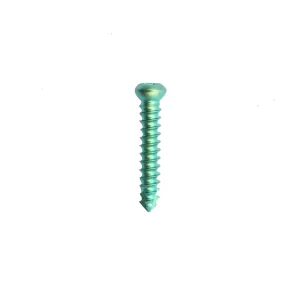
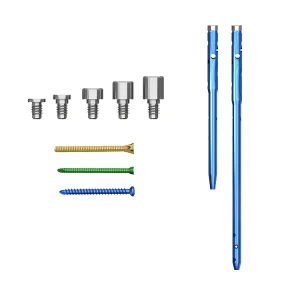
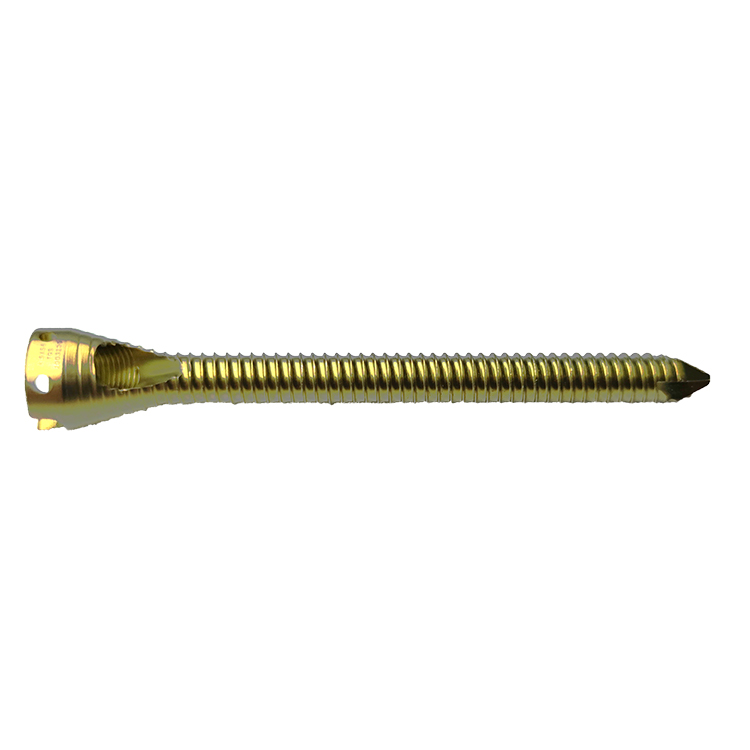
| Humeral nail locking screw I | SHG-IK | Titanium Alloy | 4.5 | 15724530 |
| Product Name | Model | Specification | Material | Code |
|---|---|---|---|---|
| Proximal Femoral Nail Antirotation Intramedullary Nail | SGM-IIK | 9.0×170×130° | Titanium Alloy | 15649170 |
| Proximal Femoral Nail Antirotation Intramedullary Nail | SGM-IIK | 9.0×200×130° | Titanium Alloy | 15649200 |
| Proximal Femoral Nail Antirotation Intramedullary Nail | SGM-IIK | 9.0×240×130° | Titanium Alloy | 15649240 |
| Proximal Femoral Nail Antirotation End Cap | SGM-IIK | 10×15 | Titanium Alloy | 15601115 |
| Proximal Femoral Nail Antirotation End Cap | SGM-IIK | 10×20 | Titanium Alloy | 15601120 |
| Proximal Femoral Nail Antirotation Blade | SGM-IIK | 10.5×70 | Titanium Alloy | 15600570 |
| Proximal Femoral Nail Antirotation Blade | SGM-IIK | 10.5×80 | Titanium Alloy | 15600580 |
| Proximal Femoral Nail Antirotation φ4.9 locking screw | SGM-IIK | 4.9×30--72 | Titanium Alloy | 15604930 |
| Femoral Nail locking screw I | SGG-IIIK | 6.5×75 | Titanium Alloy | 15246575 |
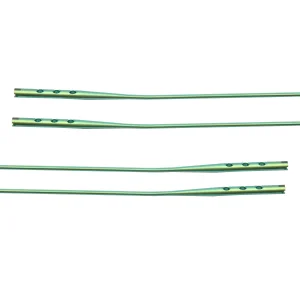
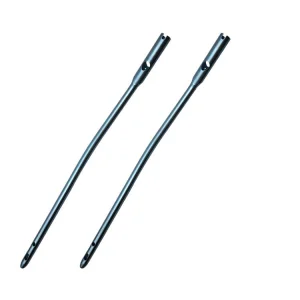
| Femoral Nail Intramedullary Nail | SGG-IIIK | 9.0-13.0 | Titanium Alloy | 15249340 |
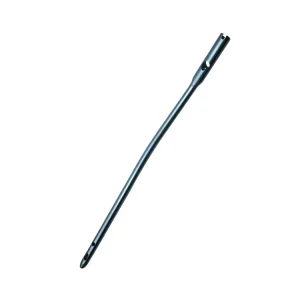
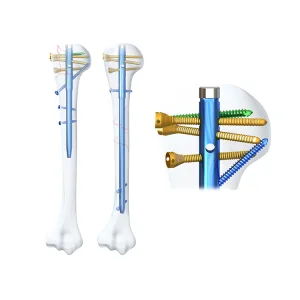
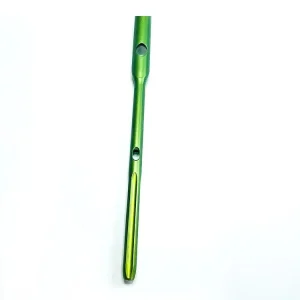
| Humeral nail Intramedullary Nail | SHG-IK | 8 | Titanium Alloy | 15728160 |
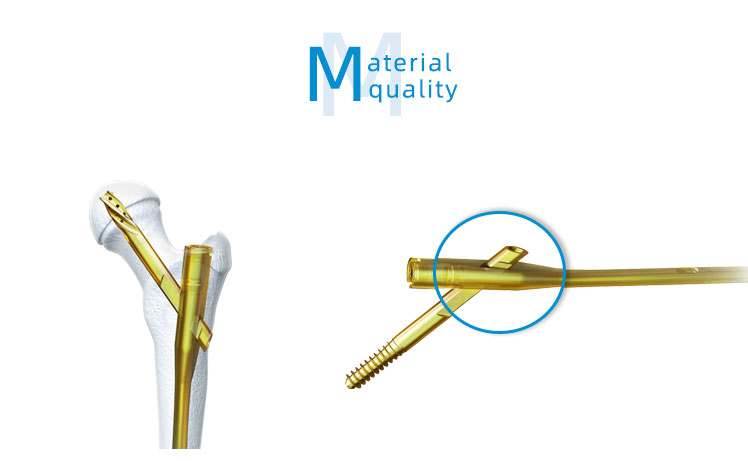
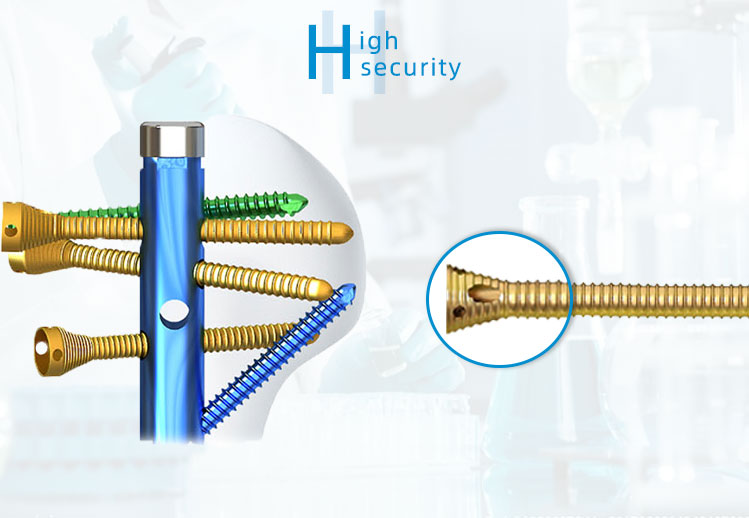
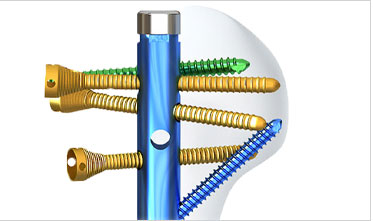
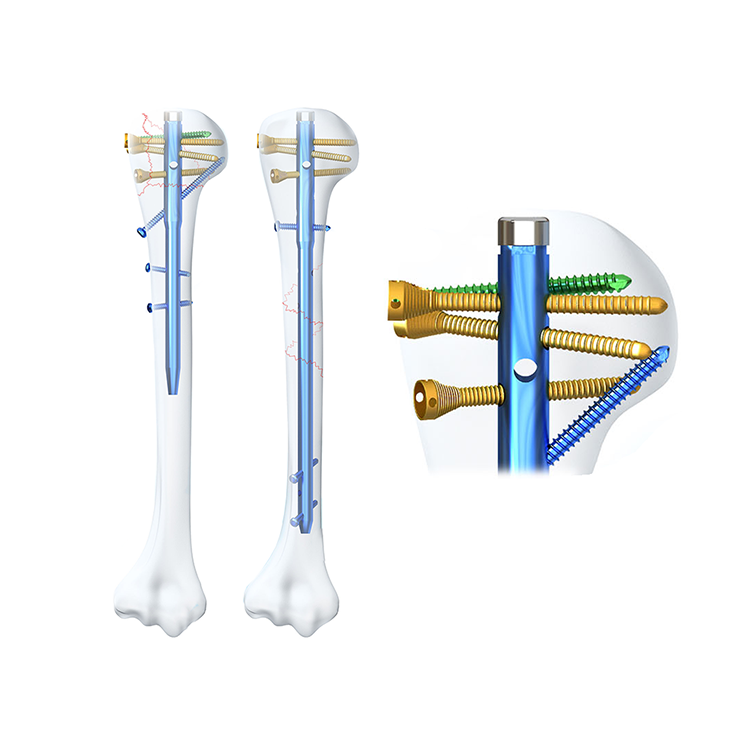
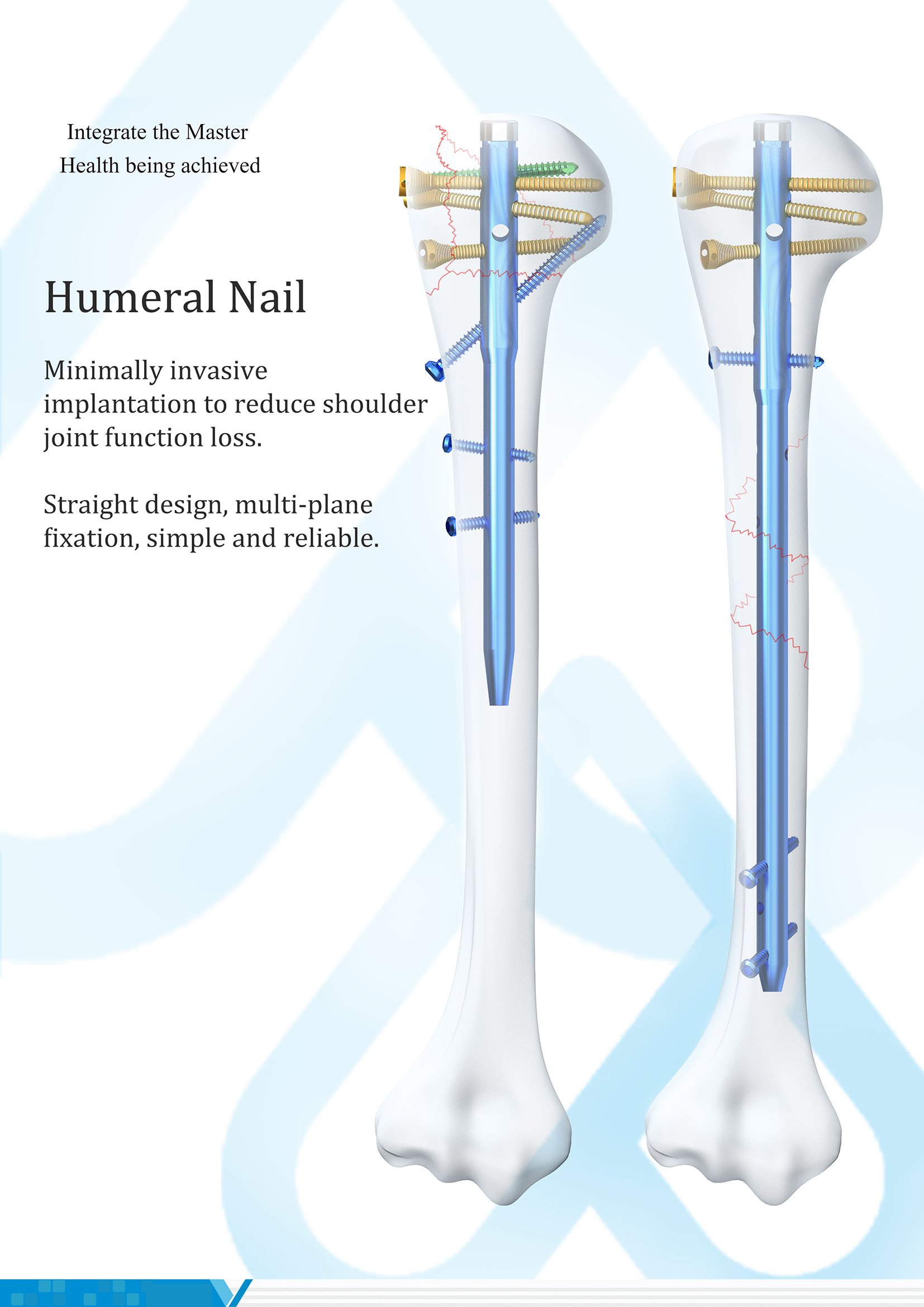
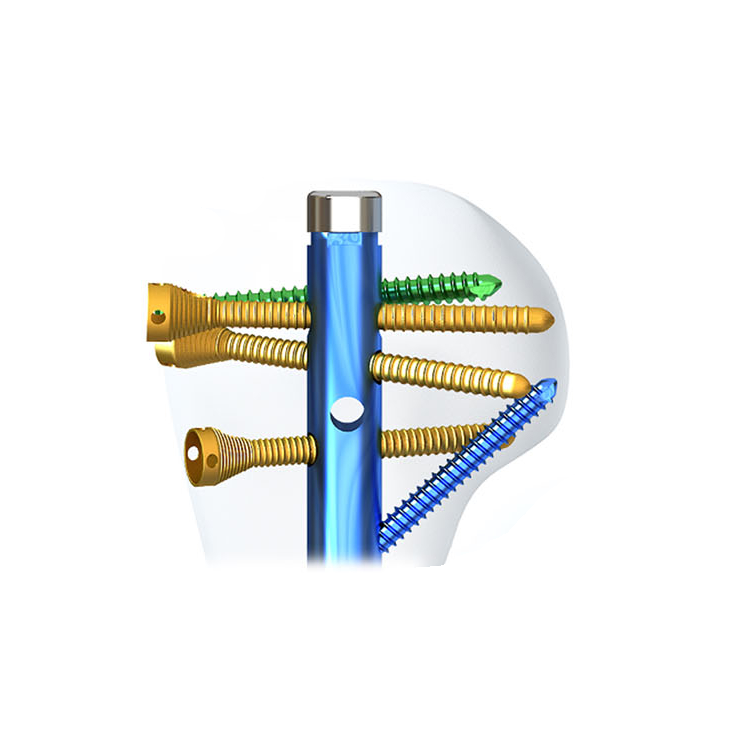
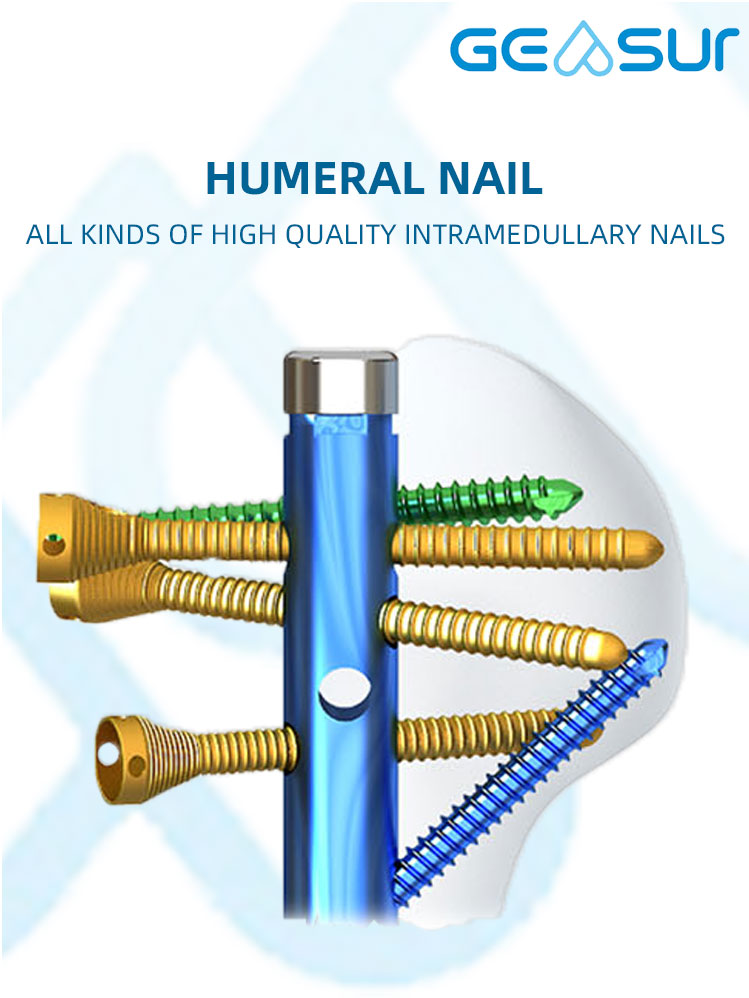
Multi-plane and Multi-locking screw fixation options, multiple options for operation, to achieve optimal fixation stability. Screw-in-screw design to further improve the fixation strength of osteoporosis. Blunt head of locking screw design to reduce the risk of excessive penetration. Locking screw countersinking design to reduce soft tissue irritation.
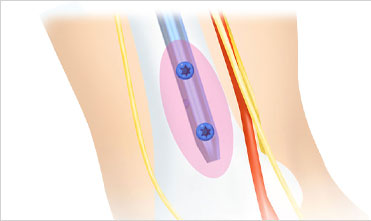
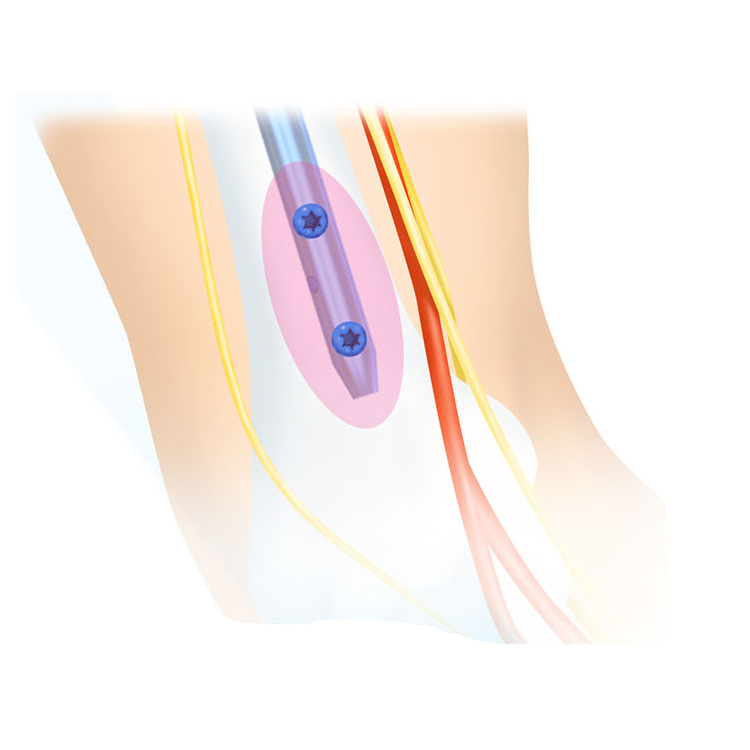
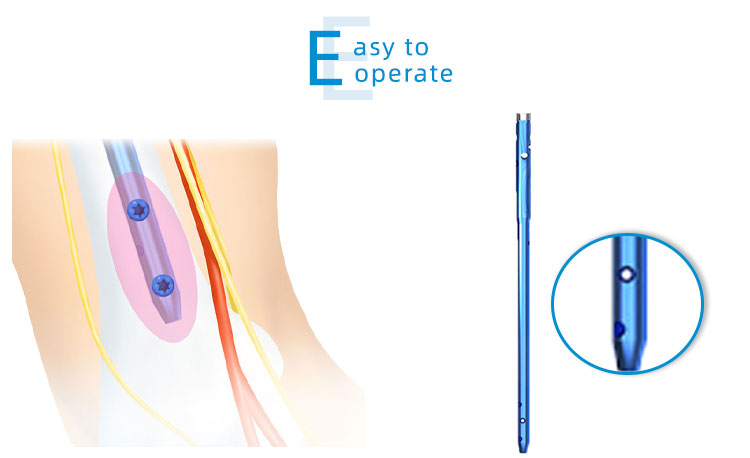
Short screw: two different plane holes for locking. Long screw: three locking holes avoid important blood vessels, located in the safe area between the median nerve and the radial nerve. Two anterior and posterior locking holes facilitate the manual operation, minimizing the occurrence of rotation and displacement of distal fracture.
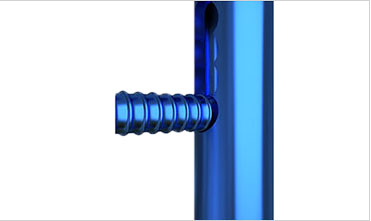
Special design of compression holes helps to increase the stability of transverse or short oblique fractures. Self-sustaining compression mechanism, no static screw is needed to maintain compression during operation.
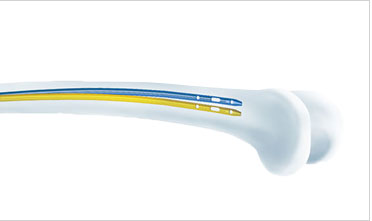
Compared with G3 with radian radius of 1.5m, the distal location of TFNA with radian radius of 1.0m in the center of medullary cavity is twice as likely as that of G3.