Revision surgery begins with a difficult question: How to choose orthopedic implants for revision surgery?
The answer depends on why the first implant failed. Loosening, infection, instability, bone loss, and periprosthetic fracture require different solutions. The 2024 American Joint Replacement Registry Annual Report shows that revision procedures remain a measurable part of total hip and knee arthroplasty care. The United Kingdom’s National Joint Registry also tracks revision risk, implant survivorship, and patient outcomes across millions of procedures. These reports support one practical lesson: implant selection must follow evidence, not habit.
The details matter. A surgeon may assess radiographs, CT scans, bone quality, alignment, soft-tissue tension, and previous operative notes. A revision stem may need greater fixation depth. A porous metal augment may fill a contained defect. A constrained liner may address persistent instability. Sometimes, the smallest-looking problem hides major bone loss.
Orthopedic revision specialist Thomas P. Sculco, MD, has emphasized, “The most important thing is to understand the cause of failure.” That principle remains highly relevant, although clinical decisions are rarely simple. Patient age, activity, infection status, implant compatibility, and surgeon experience all influence the final choice.
There is no universal implant.
Reliable planning also requires transparent discussion of registry limitations. Reported outcomes may differ by hospital, patient risk, surgical technique, and follow-up duration. Therefore, this guide examines implant fixation, modularity, material selection, and revision-specific evidence with a cautious, patient-centered perspective.
What Are Orthopedic Implants in Revision Surgery?
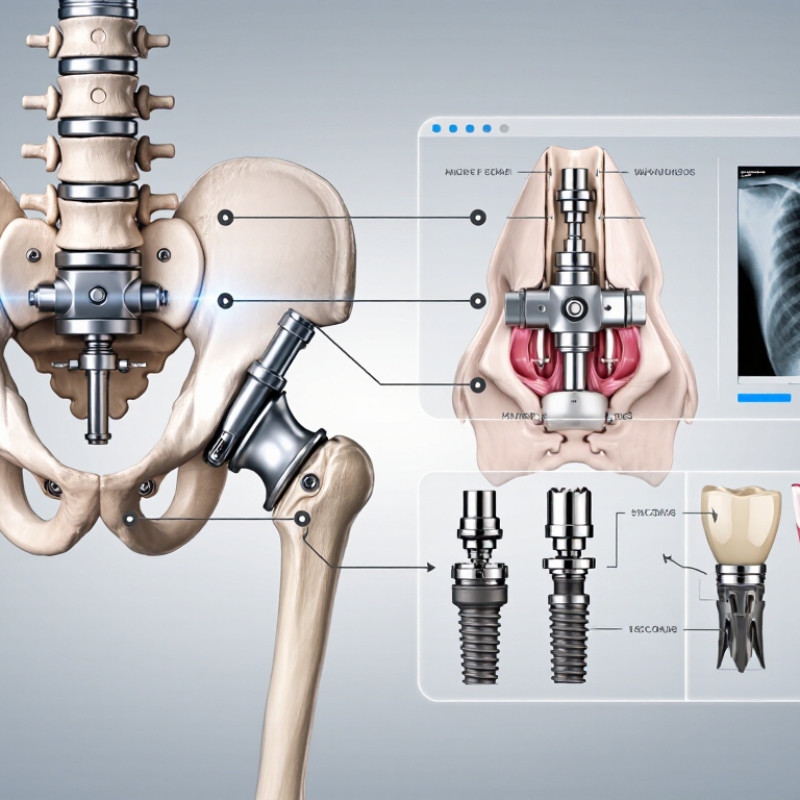
Orthopedic implants in revision surgery are medical components used to repair, support, or replace a failed joint reconstruction. They may include stems, plates, screws, cages, spacers, or customized joint parts. Surgeons select these devices after reviewing imaging, bone quality, alignment, and the reason for the earlier failure. A loose implant needs a different solution from one affected by bone loss or infection.
Revision implants often provide stronger fixation than primary-surgery components. Some extend deeper into healthy bone. Others fill missing bone or restore joint stability. The goal is not simply to insert a larger device. It is to rebuild a stable structure while protecting remaining tissue. Small details matter. Still, no implant guarantees a perfect result, and surgical plans may change during the procedure.
Tips:
Ask what caused the original failure. Request clear information about the proposed implant’s purpose, expected limits, and recovery demands. Discuss bone grafting, infection prevention, and possible alternatives with a qualified orthopedic specialist. Bring previous operative reports and imaging when available. Healing can be slower than expected. That possibility deserves honest planning.
Why Revision Surgery May Require Orthopedic Implants
Revision surgery may require orthopedic implants when the original repair no longer provides reliable support. Bone loss, loose hardware, infection, poor alignment, or repeated joint instability can change the surgical plan. In these situations, an implant may restore alignment, replace damaged surfaces, or strengthen weakened bone.
The decision is rarely based on one scan. Surgeons review medical history, physical findings, X-rays, CT images, and sometimes laboratory results. They may also assess bone quality and the condition of nearby muscles and soft tissue. A larger or specially shaped implant can help manage missing bone, but it may require more complex preparation during surgery. Not every patient needs the same solution.
Clinical planning must account for healing capacity, activity level, previous procedures, and possible complications. Infection deserves particular attention, even when symptoms seem mild. A careful team may take tissue samples during surgery before choosing the final reconstruction. No implant is a magic repair. Even excellent planning can miss an unexpected fracture or fragile bone. That reality should be discussed honestly before consent. Follow-up care, wound monitoring, rehabilitation, and realistic movement goals remain important after the operation.
How Orthopedic Implants Restore Bone and Joint Function
Why Choose Orthopedic Implants for Revision Surgery?
Revision surgery often begins with a difficult problem: weakened bone, scar tissue, instability, or a failed previous implant. Orthopedic implants help rebuild a working joint by restoring alignment, fixation, and load transfer. Surgeons may use stems, augments, sleeves, or porous components to fill bone defects. These parts create a stable framework for movement.
The UK National Joint Registry’s 21st Annual Report records more than three million joint replacement procedures. Its data also show that revision risk varies by joint, fixation method, patient health, and implant design. The American Joint Replacement Registry’s 2024 Annual Report similarly uses millions of hip and knee records to monitor implant survivorship and revision patterns. These reports support careful implant selection, not a one-size-fits-all solution.
Small details matter. A surgeon may review CT images, bone density, walking patterns, and the reason for failure. A well-fitted implant can reduce pain and improve stair climbing, standing, or reaching. However, no implant perfectly recreates a natural joint. Recovery can be uneven. Sometimes, even technically sound surgery leaves stiffness or weakness. That reality deserves honest discussion before treatment. Long-term follow-up, physical therapy, and infection monitoring remain essential after implantation.
Factors in Choosing the Right Implant for Revision Surgery
Choosing an implant for revision surgery requires more than matching the failed component.
Surgeons assess bone loss, fixation quality, joint stability, infection history, and the patient’s activity level. A porous fixation surface may help when bone is limited. A stemmed component can transfer load deeper into healthier bone. Compatibility with existing components also matters. A perfect fit on paper may create problems in the operating room.
Registry evidence supports careful, individualized decisions.
The American Joint Replacement Registry’s 2024 Annual Report tracks more than three million hip and knee procedures, showing how revision outcomes vary by patient factors, procedure type, and implant characteristics. The National Joint Registry’s 21st Annual Report also demonstrates differences in revision risk across age groups, fixation methods, diagnoses, and implant designs. These reports are useful, but they do not replace surgical judgment. Registry data usually show associations, not guaranteed causes.
Surgeons should examine radiographs, previous operative notes, and infection testing before selecting the implant system.
They should also confirm available augments, revision stems, constraint options, and instruments. Operating-room experience matters here. Small details, such as damaged bone or an unexpected tissue defect, can change the plan quickly.
No checklist removes uncertainty. That is an uncomfortable truth.
Implant choice should therefore balance published evidence, technical familiarity, and the patient’s anatomy. The decision may be strong, but rarely simple.
Recovery, Risks, and Long-Term Outcomes After Implantation
Why Choose Orthopedic Implants for Revision Surgery?
Revision surgery may restore stability when an earlier joint replacement has loosened, worn, fractured, or become infected. Orthopedic implants can replace damaged components and address bone loss. However, revision procedures are usually more complex than first-time surgery. Surgeons often review scans, blood tests, previous operative notes, and current pain patterns before selecting an implant. Each detail matters.
Recovery can take several months. Early goals may include controlling swelling, protecting the joint, and walking safely with assistance. Physical therapy then rebuilds strength and movement through measured exercises. Progress is rarely linear. Some days feel encouraging; others may bring stiffness or fatigue.
Risks include infection, blood clots, nerve injury, dislocation, fracture, and another implant failure. These risks depend on health, bone quality, surgical complexity, and rehabilitation.
Long-term outcomes can be positive, but they are not guaranteed. Regular follow-up helps detect loosening, abnormal wear, or persistent inflammation before problems become severe. Patients should report increasing warmth, drainage, fever, sudden pain, or reduced function promptly. Honest conversations about expectations remain essential. An implant may reduce pain without creating perfectly normal movement.
Tips:
Follow weight-bearing instructions carefully, even when the joint feels stronger. Keep therapy appointments and practice only approved exercises. Maintain healthy nutrition and manage conditions such as diabetes or osteoporosis. Ask how long the implant may last, what warning signs matter, and which activities should change. A written recovery plan can prevent small misunderstandings.
Conclusion
Orthopedic implants play an important role in revision surgery when a previous joint replacement or bone repair no longer provides adequate stability, alignment, or function. They may be needed to address implant loosening, bone loss, fractures, infection-related damage, or changes in surrounding tissues. By reinforcing weakened bone, replacing damaged joint components, and restoring proper movement, these implants can help rebuild structural support and improve daily function.
How to choose orthopedic implants for revision surgery depends on several factors, including the patient’s bone quality, the extent of bone loss, joint stability, activity level, medical history, and the cause of the failed procedure. Recovery may involve pain management, physical therapy, weight-bearing limits, and regular follow-up appointments. Although revision surgery can involve risks such as infection, implant failure, stiffness, or blood clots, careful planning and long-term monitoring can improve the likelihood of a stable result and meaningful functional recovery.
 KaiSo Medical
