Top 10 Factors Affecting Orthopedic Implant Safety?

Time:2026-11-27 Author:Charlotte
0%

What affects the safety of orthopedic implants? The answer is rarely one device feature. Safety can depend on implant design, material quality, surgical planning, placement, and the patient’s health. A titanium alloy component may be well made, yet still cause problems if it does not fit the patient’s anatomy or is positioned poorly. Small details matter.

This guide explores ten factors that can influence safety, including infection prevention, bone quality, allergies, implant wear, and the surgeon’s experience with a specific procedure. It also considers manufacturing controls, device testing, and follow-up care. For example, persistent pain, redness, swelling, or changes seen on an X-ray may warrant assessment by a qualified clinician. These signs do not prove that an implant has failed, but they should not be dismissed.

Outcomes vary. Age, activity level, other health conditions, and recovery habits can all affect healing and implant performance. Evidence from clinical studies and applicable device standards helps inform decisions, but no checklist can predict every individual result. That is not always easy to accept. This overview is educational, not a substitute for advice from an orthopedic specialist who can review a patient’s imaging, medical history, and treatment options.
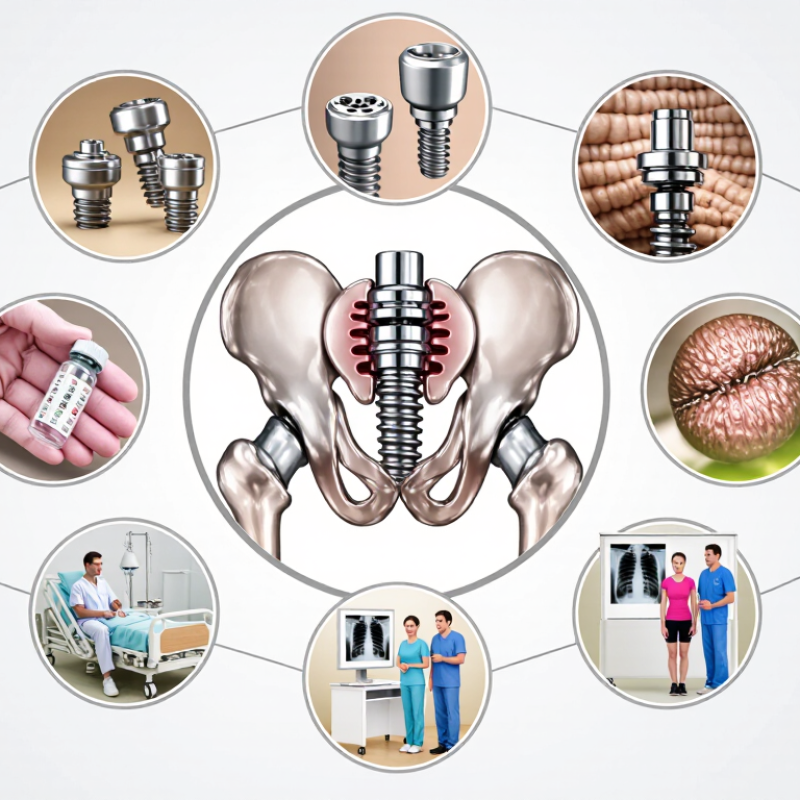
Top 10 Factors Affecting Orthopedic Implant Safety?

Biocompatibility, Corrosion, and ISO 10993 Biological Evaluation

Top 10 Factors Affecting Orthopedic Implant Safety?

Biocompatibility, Corrosion, and ISO 10993 Biological Evaluation

An implant may be mechanically strong yet still interact poorly with surrounding tissue. Biocompatibility depends on the finished device, its materials, manufacturing residues, and intended contact with the body. A polished metal surface and a porous bone-contacting surface can behave differently. Small details matter.

ISO 10993 provides a framework for evaluating biological risks, not a simple pass-or-fail label. Assessment considers factors such as contact type, duration, and available chemical information. Testing may examine cell response, irritation, or systemic effects when justified by the risk analysis. More tests do not automatically mean a safer device. The chosen evidence must fit the actual implant and its use.

Corrosion deserves close attention in the warm, salty environment around an implant. Microscopic movement at a joint or modular connection can wear surfaces and release particles or metal ions. These changes may contribute to local tissue reactions, though the response varies between patients. Laboratory testing can help, but it cannot recreate every person’s biology or years of movement. That limitation matters. Evaluators should consider the complete device, including coatings, cleaning, and sterilization, rather than relying on a material name alone. Follow-up observations can also reveal issues that bench tests miss.

Top 10 Factors Affecting Orthopedic Implant Safety

Biocompatibility, corrosion, and ISO 10993 biological evaluation

The 1–5 scores are a qualitative illustration of review priority, not clinical statistics or measured risk rates. Biological evaluation under ISO 10993 is risk-based; relevant endpoints depend on the device’s materials, contact type, and duration. Safety assessment also considers corrosion and wear products, mechanical performance, manufacturing, and patient and surgical factors.

Design, Fixation, and 58.4% Hip Survival at 25 Years (Lancet, 2019)

A hip implant is not safe simply because it looks well positioned on an X-ray. Long-term performance depends on design, fixation, surgical placement, bone quality, and daily loading. Small differences matter. A loose cup can cause groin pain, while wear particles may contribute to bone loss around the joint.

A 2019 Lancet analysis estimated that 58.4% of total hip replacements remained unrevised at 25 years. That is a population estimate, not a forecast for one person or every implant. The evidence reflects different devices, patients, and follow-up methods. Some implants last longer; others fail earlier. The distinction matters. “Survival” generally means no revision operation, not a pain-free hip with perfect function.

For patients, practical questions include whether the fixation suits their bone quality and whether long-term follow-up data are available. After surgery, persistent pain, fever, wound drainage, or sudden loss of function deserves prompt clinical assessment. Pain isn’t always failure. Still, symptoms need context, not guesswork. A clear scan can reassure, but it cannot describe every part of daily function or explain every ache.

Manufacturing, Sterilization, and FDA Quality-System Controls

Orthopedic implant safety begins long before a device reaches an operating room. Manufacturing controls should define material specifications, machining steps, cleaning limits, and inspection criteria. For a metal component, even a tiny surface defect can affect fatigue performance or tissue contact. Documented checks help identify drift between production lots. A clean-looking implant is not proof of a controlled process.

Sterilization needs validation for the device, its packaging, and the chosen cycle. Teams monitor key parameters and assess whether packaging remains intact during shipping and storage. Changes to materials or package design may require renewed evaluation. Small details count. A seal wrinkle can matter. Sterility assurance also depends on controlled handling after processing, not just a successful cycle record.

FDA quality-system controls support consistent design, production, supplier oversight, and corrective action. Records should connect a finished device to its materials, process history, inspections, and sterilization status. When a complaint or inspection finding appears, timely investigation can reveal whether the issue is isolated or systemic. Even strong systems can miss a weak signal; teams should question comfortable assumptions. No control removes every risk, but clear evidence and disciplined review make problems easier to detect before they reach patients.

Patient Health and Surgical Technique: Primary PJI Risk of About 1–2%

For primary hip and knee replacement, periprosthetic joint infection (PJI) risk is commonly estimated at about 1–2%, according to the American Association of Hip and Knee Surgeons. The figure is a population estimate, not a personal prediction. Diabetes, smoking, poor nutrition, and active skin or dental infections may affect an individual’s risk. Surgical factors matter too: sterile handling, appropriate antibiotic timing, and careful wound closure help reduce avoidable contamination. The CDC’s 2017 surgical-site infection guideline supports evidence-based prevention practices, including appropriate antimicrobial prophylaxis.

Small details count.

Tips: Tell your care team about recent infections, smoking, and medications. Ask how blood sugar and skin preparation will be managed. Follow wound-care instructions, even when the incision looks fine.

A tidy percentage can hide a messy reality. Risk varies with health, procedure, and follow-up, and studies do not always define infection identically. A surgeon’s experience and technique are important, but neither can erase every risk. Patients should discuss their own health profile and prevention plan with their orthopedic team, rather than treating 1–2% as a guarantee.

Postmarket Surveillance, Revision Rates, and Registry Follow-Up

Postmarket surveillance begins after the operating room. A patient’s implant may look stable on an early X-ray, yet loosening, infection, or wear can emerge years later. The UK National Joint Registry’s 2024 Annual Report covers more than four million joint replacement procedures and tracks revision outcomes over time. Its results show why a single average can mislead: revision risk varies with patient age, diagnosis, implant design, and surgical factors. Context matters.

Revision rates are useful signals, not complete safety scores. A low rate may reflect short follow-up, while a higher rate can reflect closer monitoring or a higher-risk patient group. The Australian Orthopaedic Association National Joint Replacement Registry’s 2024 Annual Report compares revision outcomes across procedures and implant characteristics, helping identify patterns that small studies may miss. But registries cannot explain every individual failure. They may also miss procedures or later complications treated outside recorded systems. This is uncomfortable, but important.

Clinicians and manufacturers should review registry alerts alongside adverse-event reports, imaging, and patient symptoms. A painful, swollen joint needs assessment, not a reassuring population statistic. Follow-up should be long enough to detect late failures, and reports should clearly state their denominators and data limits. Better data helps. It does not remove uncertainty.

FAQS

What does biocompatibility mean for an orthopedic implant?

It describes how the finished implant interacts with surrounding tissue. Materials, surface finish, manufacturing residues, cleaning, and sterilization can all matter.

Does ISO 10993 give an implant a simple safety pass?

No. It provides a framework for evaluating biological risks. The evidence should fit the implant’s materials, contact type, and time in the body.

Why can different surfaces behave differently?

A polished metal surface and a porous bone-contacting surface may interact differently with tissue. Small details matter.

How can corrosion affect an implant?

Warm, salty conditions and tiny movements can wear surfaces near joints or connections. Particles or metal ions may be released. The body’s response varies.

Can laboratory tests predict every biological response?

No. Tests can help assess risk, but they cannot reproduce every person’s biology or years of movement. That leaves gaps.

What affects the long-term performance of a hip implant?

Design, fixation, surgical placement, bone quality, and daily loading all matter. A well-positioned image alone does not tell the whole story.

What does a 25-year hip replacement survival estimate mean?

One 2019 analysis estimated that 58.4% remained unrevised after 25 years. “Survival” means no revision operation, not necessarily pain-free function.

When should someone seek clinical assessment after hip surgery?

Persistent pain, fever, wound drainage, or sudden loss of function deserves prompt assessment. Pain is not always implant failure, but it needs context.

Conclusion

What affects the safety of orthopedic implants goes beyond the implant material alone. Biocompatibility testing, including biological evaluation under ISO 10993, helps assess how materials interact with the body, while corrosion resistance can reduce the risk of material degradation over time. Implant design and fixation also matter: appropriate fit and stable integration support long-term function. A 2019 Lancet analysis reported 58.4% survival at 25 years for hip replacements, illustrating both the potential durability of implants and the importance of long-term outcome data.

Safety also depends on consistent manufacturing, validated sterilization, and quality-system controls, as well as patient health and surgical technique. Primary periprosthetic joint infection occurs in about 1–2% of cases, though individual risk varies. After implantation, postmarket surveillance, revision-rate tracking, and registry follow-up help identify complications and improve future care.

Charlotte

Charlotte

Charlotte is a seasoned marketing professional with a deep understanding of the company's portfolio and a passion for elevating its presence in the market. With a keen eye for detail and a commitment to excellence, she ensures that our professional blog is regularly updated with insightful articles......