An orthopedic implant may look familiar across markets, but its route to approval can differ sharply by region. A titanium hip stem, a locking plate, and a spinal cage each raise distinct questions about intended use, evidence, and risk. The details matter. Regulators may assess device classification, clinical data, quality systems, labeling, sterilization, and post-market monitoring under different frameworks. Requirements can also change, so a document accepted last year may need review before a 2026 submission. How to ensure orthopedic implants meet regional medical regulations starts with mapping each target market and confirming current requirements through official sources.
That map should connect product claims to test reports, material specifications, manufacturing records, and traceability data. Labels and instructions need careful review, including language, warnings, symbols, and the roles of local representatives or importers where applicable. Teams should record who checked each requirement and when. Keep evidence easy to retrieve. A missing sterilization rationale or unclear implant size reference can delay review and create avoidable uncertainty. The practical work is cross-functional: regulatory specialists, engineers, clinicians, quality teams, and suppliers need a shared version of the facts. Still, no single checklist fits every device or jurisdiction. This guide offers a structured starting point, not legal advice or a promise of approval. Regional rules, product changes, and agency guidance deserve ongoing review; even experienced teams can miss a small but consequential detail.
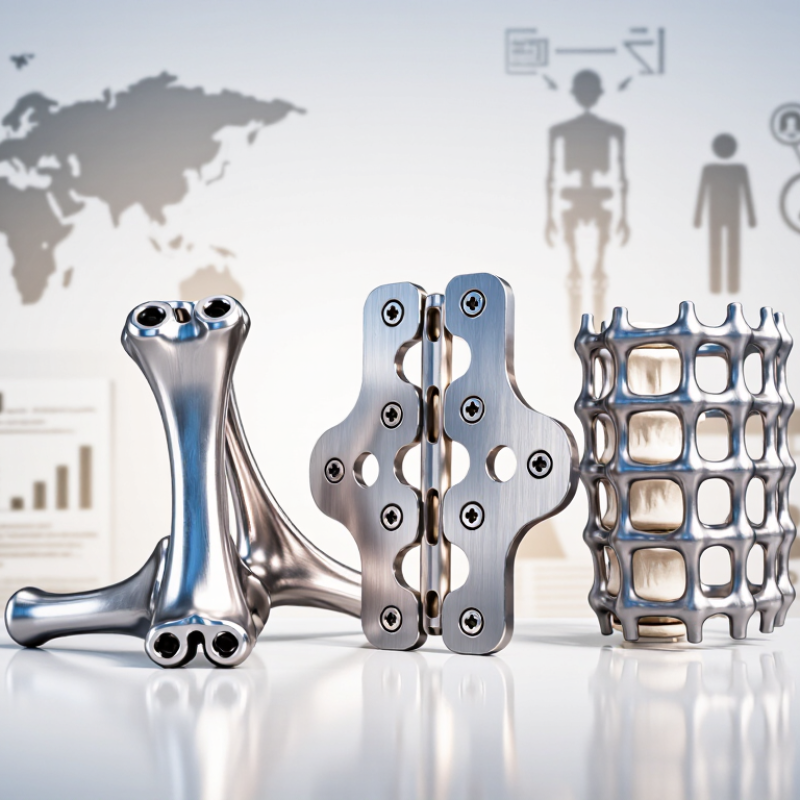
Before preparing a 2026 market plan, name the regions where the orthopedic implant will actually be sold. Requirements can differ across countries, even when products serve the same clinical purpose. Check each region’s current regulator guidance, recognized standards, and local registration pathway. Include manufacturing and distribution locations in your planning, not only the intended sales market. Small details matter. A spreadsheet can help, but it can also hide an uncertain assumption; record who verified each requirement and when.
Classify the implant separately under each target region’s framework. Document its intended use, anatomical site, duration of contact, invasiveness, and whether it is active or passive. A fixation plate, joint replacement, and spinal implant may face different risk classifications. Materials, sterilization method, reusable instruments, and supplied accessories can affect the regulatory file or require separate assessment. Do not assume one region’s classification automatically applies elsewhere. Confirm the device definition and classification rules with official sources or qualified local regulatory professionals.
Tips: Keep a region-by-region table with the proposed class, evidence needed, and open questions. Compare the device’s actual design and claims with the classification rationale. Keep evidence traceable. If a borderline feature changes, revisit the assessment rather than relying on last year’s notes.
Regional compliance begins with a market-by-market map, not a single global checklist. For each destination, identify the implant’s device classification, applicable standards, registration route, and local representation requirements. A fixation screw may face different evidence expectations from a joint replacement, even when both use similar materials. Confirm current regulator guidance and standards editions; a familiar requirement may have changed. Details matter.
Build labeling requirements into the map early. Check language rules, required symbols, implant identifiers, traceability details, and instructions for use. Labels and packaging should match the approved device configuration and intended use. A translation that reads clearly to a clinician can still omit a locally required warning or field. Test draft labels against actual packaging space, not just a document template.
Your quality system should support the evidence behind each regional submission. Keep design records, risk assessments, supplier controls, production checks, and complaint procedures linked to the relevant device versions. Requirements may overlap, but do not assume one audit or certificate satisfies every market. Document why each standard applies, who reviewed the decision, and when it needs reassessment. Borderline classifications deserve a recorded expert review, not a guess. The map will never be perfectly tidy, so flag unresolved questions and verify them before shipment.
Key effective or application years for selected medical-device frameworks relevant to orthopedic implants.
How to use this chart: These dates are framework milestones, not compliance scores. In 2026, map each implant’s classification, applicable standards, labeling rules, and quality-system obligations to the current requirements in each target market.
Sources: FDA QMSR · EU MDR · Canada Medical Devices Regulations · Japan PMDA · Australia Medical Devices Regulations · China State Council Decree 739
For orthopedic implants, regional clearance in 2026 will depend on evidence that matches the device’s intended use, risk, and patient population. Build a traceable package: fatigue and wear testing, material and corrosion assessments, sterilization validation, and clinical outcomes. Link each test to a specific safety or performance claim. Keep the protocol, acceptance limits, and results aligned; unexplained gaps can weaken an otherwise strong submission. Shortcuts show.
Clinical evidence should reflect the actual implant, surgical technique, and users. The UK National Joint Registry’s 2024 Annual Report draws on more than 3.5 million joint replacement procedures, illustrating the value of long-term revision data. Use relevant registry benchmarks where suitable, but explain differences in patient mix and follow-up. A low revision rate alone does not prove superiority.
For US, EU, and UK submissions, map evidence to each region’s applicable pathway and documentation requirements. Track adverse events, reoperations, and functional outcomes with clear denominators and follow-up periods. Bench performance is not clinical benefit. Nor should small studies carry claims they cannot support. One uncomfortable gap often remains: teams may collect extensive test data but overlook whether real-world users can reproduce the tested surgical conditions. Make that question part of evidence planning.
How to Meet Regional Rules for Orthopedic Implants in 2026
Preparing a regional application starts with confirming the implant’s classification and intended use in that market. A fixation plate and a joint replacement may face different evidence and review expectations. Check current requirements with the relevant authority or a qualified regulatory specialist; rules can change, and details vary by jurisdiction.
Build a submission checklist around the region’s required format, language, and review pathway. Common materials include device specifications, risk-management records, manufacturing controls, sterilization validation, biocompatibility data, and clinical evidence. Explain how the implant is used, which patients it is intended for, and what alternatives or limitations apply. Keep labeling, instructions, and application claims consistent. Small mismatches can trigger questions.
Use a document-control table to track each file’s owner, version, translation status, and approval date. For example, verify that the material grade in the technical file matches the grade in the test reports. Details matter. Before submitting, check portal fields and attachments against the authority’s latest instructions, then retain the receipt and a complete copy. A polished dossier can still contain gaps; an independent review may catch them, though no checklist guarantees acceptance.
An orthopedic implant’s approval is not a finish line. In 2026, manufacturers need a practical plan for maintaining it as devices are used in clinics. Requirements vary by region, so teams should check current rules for safety reporting, complaint handling, and post-market studies. Assign clear owners and deadlines. Small delays can leave important signals unnoticed.
Track complaints, returns, surgical feedback, and device performance in a consistent system. Look for patterns, such as repeated wear near a joint surface or unexpected instrument damage. A single report may not show a trend. Several similar reports might. Document how each signal was assessed, even when no action is needed. That record supports decisions and helps prepare for inspections.
When evidence points to a risk, investigate promptly and follow the reporting timelines that apply in each market. Updates to labeling, instructions, manufacturing, or design may require a regulatory review before implementation. Keep versions traceable, and confirm that affected teams receive the right materials. This sounds tidy. It rarely is. Regional differences and incomplete clinical feedback can complicate decisions, so review the process regularly with clinical, quality, and regulatory specialists. A useful monitoring plan should be specific enough to guide action, yet flexible enough to respond when evidence changes.
| Region | Market access and quality-system checkpoints | Post-market monitoring | Changes that may affect approval | Practical 2026 maintenance action | Key regulatory references |
|---|---|---|---|---|---|
| United States | Determine the device’s FDA classification and applicable route, such as 510(k), De Novo, or PMA. Establish applicable establishment registration, device listing, and Unique Device Identification (UDI) obligations. FDA’s Quality Management System Regulation (QMSR), effective February 2, 2026, incorporates ISO 13485:2016 requirements. | Maintain complaint handling and Medical Device Reporting (MDR) processes. Follow any device-specific post-approval study or post-market surveillance order. Keep required records and assess trends for adverse events and product issues. | Assess design, materials, manufacturing, labeling, and intended-use changes under FDA’s change-control and submission rules. A change may require a new 510(k), a PMA supplement, or another regulatory action before distribution. | Review the quality system against QMSR requirements; reconcile complaints, MDR decisions, and CAPA records; and document the regulatory assessment and approval status for every planned change. | Federal Food, Drug, and Cosmetic Act; 21 CFR Parts 803, 807, 814, 820, and 830; FDA guidance on when to submit a 510(k) for a change to an existing device. |
| European Union | Meet Regulation (EU) 2017/745 (MDR) requirements, including the applicable conformity-assessment route, notified-body involvement where required, CE marking, and UDI obligations. Requirements depend on the device’s classification and intended purpose. | Maintain a post-market surveillance (PMS) system and, where applicable, a post-market clinical follow-up (PMCF) plan. Prepare a periodic safety update report (PSUR): at least every two years for Class IIa devices and at least annually for Class IIb and Class III devices. Report serious incidents and field safety corrective actions as required. | Evaluate changes to design, intended purpose, manufacturing, and clinical evidence against MDR requirements and the notified-body certificate. Changes may require notified-body review or a new conformity-assessment step. | Keep PMS, PMCF, clinical evaluation, risk-management, and PSUR records aligned. Check current UDI and EUDAMED obligations against the applicable implementation dates and module requirements. | Regulation (EU) 2017/745, particularly Articles 10, 27, 83–92 and Annexes IX–XI; Regulation (EU) 2024/1860 on, among other matters, EUDAMED implementation. |
| Canada | Confirm the device’s Canadian risk class and applicable Medical Device Licence requirements. Class II, III, and IV devices generally require a licence before sale; applicable manufacturers must maintain quality-system certification under the Medical Devices Regulations, including the relevant MDSAP requirements. | Maintain complaint and incident processes, report qualifying incidents to Health Canada, and carry out required recalls or corrective actions. Keep distribution and traceability records appropriate to the device and applicable rules. | Determine whether a design, intended-use, manufacturing, or labeling change requires a licence amendment, a new application, or another regulatory filing before sale. Update the quality and post-market records accordingly. | Verify licence and quality-system status; review complaint and incident-reporting decisions; and document whether each proposed change affects the Canadian licence or supporting evidence. | Food and Drugs Act; Medical Devices Regulations (SOR/98-282), including licensing, quality-system, incident-reporting, and recall provisions; Health Canada MDSAP requirements. |
| Australia | Confirm the applicable device classification and conformity-assessment evidence, then ensure the device is included in the Australian Register of Therapeutic Goods (ARTG) before supply, unless an exemption applies. The Australian sponsor has defined regulatory responsibilities. | Maintain post-market monitoring, complaint handling, adverse-event reporting, and recall procedures. Provide information to the Therapeutic Goods Administration (TGA) when required and keep records supporting continued compliance with the Essential Principles. | Assess changes to the device, intended purpose, manufacturing, and conformity-assessment evidence. Changes may affect ARTG details, conformity-assessment documentation, or the need for a new or varied application. | Confirm ARTG details and sponsor records are current; check that adverse-event and recall procedures meet TGA requirements; and retain evidence supporting ongoing Essential Principles compliance. | Therapeutic Goods Act 1989; Therapeutic Goods (Medical Devices) Regulations 2002; TGA Essential Principles and post-market monitoring requirements. |
| Japan | Confirm the Japanese classification and applicable approval, certification, or notification route. Market access generally involves the relevant marketing authorization holder and applicable quality-management-system and good-vigilance-practice requirements. | Maintain safety-information collection, complaint assessment, and required adverse-event reporting through the responsible marketing authorization holder. Apply any device-specific conditions, re-examination, or periodic reporting requirements where applicable. | Assess whether a change to design, materials, manufacturing, labeling, or intended use requires a partial change approval, minor-change notification, or another regulatory procedure before implementation. | Coordinate change control with the Japanese marketing authorization holder; confirm the applicable filing route before a change is introduced; and keep safety, quality, and approval records consistent. | Pharmaceuticals and Medical Devices Act; applicable Ministerial Ordinances on quality management and good vigilance practice; PMDA and MHLW requirements for the device’s classification and route. |
| China | Confirm the NMPA device classification and applicable registration or filing route. Class III devices generally require registration; registration or filing requirements for other classes depend on the applicable rules and device category. | Maintain adverse-event monitoring, risk assessment, complaint handling, and any required reporting under China’s medical-device monitoring rules. Keep records supporting the device’s safety and performance after market entry. | Evaluate changes to product design, materials, manufacturing, and intended use against NMPA change-registration and filing requirements. Certain changes may require regulatory approval or filing before the changed device is marketed. | Confirm registration or filing information remains accurate; review adverse-event signals and risk assessments; and obtain a documented NMPA change-pathway assessment before implementing product changes. | Regulations on the Supervision and Administration of Medical Devices; NMPA rules on medical-device registration and filing, adverse-event monitoring, and device identification, as applicable. |
Note: Requirements depend on device classification, intended purpose, product configuration, and local implementation. Confirm current obligations with the relevant authority or qualified local regulatory counsel before making market-access or change-control decisions.
Requirements vary across countries, even for implants with similar clinical purposes. Include sales, manufacturing, and distribution locations. Details matter.
Yes. Do not assume one region’s classification applies elsewhere. Check local rules and confirm the device definition with official sources or qualified professionals.
Consider its intended use, anatomical site, contact duration, invasiveness, and whether it is active or passive. Materials and supplied instruments may matter too.
Record the proposed class, required evidence, open questions, and who verified each requirement. Add the verification date. Check it again.
Common materials include device specifications, risk-management records, manufacturing controls, sterilization validation, biocompatibility data, and clinical evidence. Exact requirements vary.
Keep labeling, instructions, and application claims consistent. Check that material grades match across technical files and test reports. Small mismatches matter.
Confirm the required format, language, review pathway, portal fields, and attachments against current instructions. Keep the submission receipt and a complete copy.
No. An independent review may catch gaps, but no checklist guarantees acceptance. A polished dossier can still contain an uncertain assumption.
How to ensure orthopedic implants meet regional medical regulations begins with identifying the intended markets and classifying each implant according to its design, intended use, and risk profile. For every region, manufacturers should map the applicable standards, labeling rules, and quality-system requirements, then organize their development and documentation processes around those expectations. Clear planning early on can help reveal differences between markets and reduce avoidable delays.
Regulatory readiness also depends on robust clinical, safety, and performance evidence that supports the implant’s intended use. Applications should be tailored to each region, with required technical records and supporting materials prepared for submission. After approval, ongoing monitoring of product performance, user feedback, and safety information helps identify potential issues and informs appropriate updates to documentation, labeling, or manufacturing processes. Maintaining this cycle supports continued compliance as regional requirements and product knowledge evolve.

KaiSo Medical