Why is market demand important for orthopedic implants planning? The answer begins with the patient, not the sales forecast. Demand signals where surgeons need reliable solutions, which patient groups are growing, and what hospitals can realistically purchase. An aging population may increase hip and knee replacement volumes. Sports injuries may raise demand for trauma and ligament-repair systems. However, demand is never a simple number.
Dr. Kevin J. Bozic, an orthopedic surgeon and health services researcher, has stated, “The goal is to improve the value of care for patients.” This principle gives implant planning a practical direction. Manufacturers must study clinical outcomes, revision rates, operating-room time, and total treatment costs. They should also listen to surgeons describing small but important details, such as difficult instrument handling or excessive trial components on a sterile table. These details can reveal unmet demand before market reports do.
Good planning also requires restraint. A popular implant design may not suit every anatomy, hospital budget, or surgical technique. Forecasts can fail when they depend only on historical sales. They may overlook reimbursement changes, training requirements, supply disruptions, or regional differences in procedure volume. That is where experience matters. Teams should compare registry evidence, regulatory requirements, surgeon feedback, and verified purchasing data before committing resources.
Market demand is therefore a clinical and operational signal. It helps companies develop implants that are needed, usable, and economically defensible. Still, demand alone cannot prove value. Careful validation remains essential.
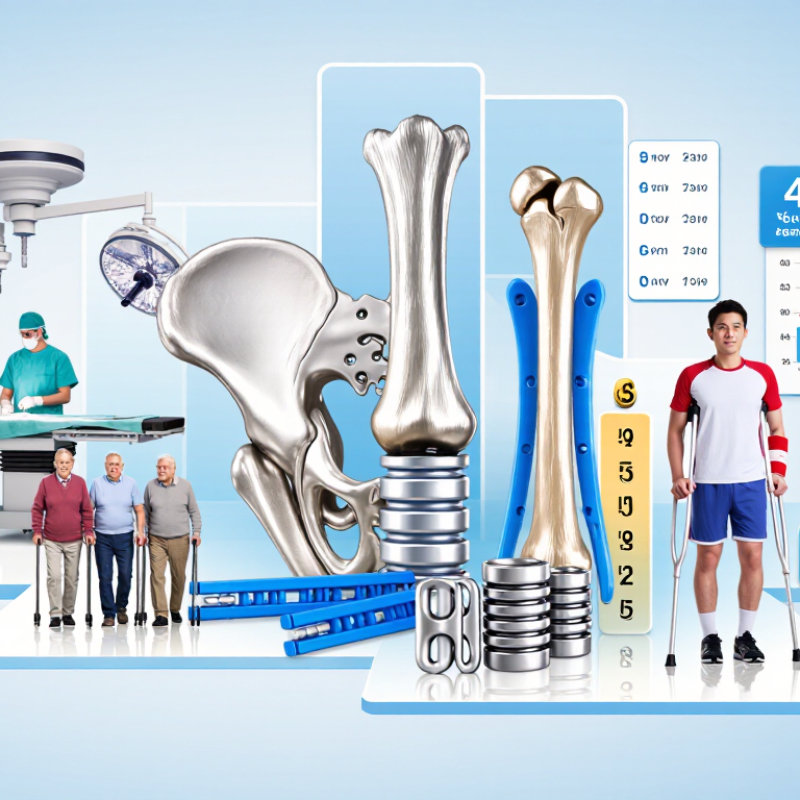
Defining Market Demand in Orthopedic Implant Planning
Market demand means more than the number of patients with joint pain. It reflects patients needing surgery, surgeons able to perform it, hospital capacity, reimbursement, and reliable follow-up care. The World Health Organization reports that approximately 1.71 billion people live with musculoskeletal conditions worldwide. Its estimates also show that low back pain affected about 619 million people in 2020, with cases potentially reaching 843 million by 2050. These figures indicate clinical need, not automatic implant sales.
Planning should translate population data into local evidence. A hospital may record rising knee replacement referrals, but only three operating rooms may support the demand. Waiting-list length, surgeon schedules, implant sizes used, revision rates, and monthly procedure volumes offer a clearer picture. UN World Population Prospects 2022 projects the global share of people aged 65 and older to rise from about 10% in 2022 to 16% by 2050. Aging supports long-term demand, yet access and affordability can still limit actual procedures. A forecast can be wrong. That uncertainty deserves attention.
Tips: Combine national reports with hospital-level data. Review twelve to twenty-four months of procedures, cancellations, and stock-outs. Interview surgeons and procurement teams before setting inventory targets. Keep a conservative buffer for common sizes, but avoid excessive stock. Market demand changes with referral patterns, clinical guidelines, and reimbursement policies. A spreadsheet alone cannot explain every empty operating-room slot.
Market demand begins with patient needs, not procedure counts. The World Health Organization reports that 1.71 billion people live with musculoskeletal conditions worldwide. Osteoarthritis affects approximately 528 million people (WHO, Musculoskeletal Health, 2022). These figures signal broad demand, but they do not explain every patient’s decision. Age, mobility goals, pain severity, income, and access to rehabilitation shape implant selection.
Patient expectations are also changing. Older adults increasingly seek active lifestyles, while younger patients may require longer implant service life. The United Nations projects that one in six people globally will be over 60 by 2030 (UN World Social Report, 2023). This trend increases the need for durable designs, clearer patient education, and flexible surgical pathways. Outpatient treatment is expanding in many health systems, yet faster discharge can expose gaps in home support and follow-up care.
Planning must therefore combine registry evidence with local clinical experience. The OECD’s Health at a Glance 2023 shows substantial differences in hip and knee replacement rates across countries, reflecting access, demographics, and clinical practice. A high demand estimate can still be misleading. It may ignore delayed diagnosis or unequal referral patterns. That is the uncomfortable part. Teams should review revision rates, waiting lists, patient-reported outcomes, and rehabilitation capacity before increasing inventory. Trends matter. Patient context matters more.
| Demand Dimension | Evidence-Based Indicator | Latest Reported Data | What It Means for Implant Planning | Source |
|---|---|---|---|---|
| Overall musculoskeletal disease burden | People living with musculoskeletal conditions worldwide | Approximately 1.71 billion people | Supports long-term planning for orthopedic consultation, conservative care, rehabilitation, and implant procedures across multiple disease areas. | World Health Organization, 2022 |
| Osteoarthritis demand | People living with osteoarthritis globally | Approximately 528 million in 2019 | Indicates a large potential need for joint-preserving treatment, pain management, and joint-replacement pathways, especially for the knee and hip. | World Health Organization, 2023 |
| Chronic low-back pain | People affected by low-back pain worldwide | Approximately 619 million in 2020; projected to reach 843 million by 2050 | Highlights the importance of separating surgical candidates from patients better served by non-operative treatment, reducing inappropriate implant demand forecasts. | The Lancet, 2023 |
| Population ageing | Global share of people aged 65 years or older | 10% in 2022; projected to reach 16% by 2050 | Ageing populations generally increase the need to plan for degenerative joint disease, fragility-related trauma, revision care, and longer post-operative support. | United Nations, World Social Report 2023 |
| Age-related fracture risk | Lifetime risk of hip fracture among people aged 50 years or older | About 1 in 3 women and 1 in 5 men | Implant inventories and surgical capacity should account for urgent trauma demand, particularly in regions with rapidly ageing populations. | International Osteoporosis Foundation |
| Common anatomical treatment areas | Most frequently affected joints in osteoarthritis | Knee, hip, hand, and other peripheral joints | Demand planning should segment products by anatomy rather than treating the orthopedic implant market as a single category. | World Health Organization, 2023 |
| Patient access and unmet need | Musculoskeletal conditions as a major contributor to disability worldwide | Approximately 149 million years lived with disability in 2019 | Shows why planning should include affordability, referral capacity, operating-room availability, rehabilitation, and access to follow-up care—not only implant volume. | World Health Organization, 2022 |
| Technology and personalization trend | Increasing use of digital planning, patient-specific assessment, and data-supported workflows | Trend documented in recent orthopedic literature; adoption varies by country and healthcare setting | Planning should evaluate the need for compatible imaging, navigation, instrumentation, training, data systems, and surgeon support before expanding a product portfolio. | National Library of Medicine, review of digital technologies in orthopedics |
| Regional prioritization | Variation in disease burden, ageing, trauma incidence, healthcare coverage, and surgical capacity | Market demand differs substantially between countries and health systems | Local epidemiology and treatment-access data should be used to estimate procedure volumes, inventory needs, reimbursement feasibility, and service requirements. | World Health Organization, Global Health Observatory |
Note: These indicators describe underlying patient need and treatment trends. They should not be interpreted as direct forecasts of orthopedic implant sales or procedure volumes without local clinical, reimbursement, and hospital-capacity data.
Competition is not measured by product count alone. It is shaped by hospital contracts, surgeon preferences, procedure volume, and revision capacity. The OECD Health at a Glance 2023 reports more than threefold variation in hip replacement rates across reporting countries. Demand is therefore highly local. A crowded market may still contain underserved hospitals. However, planners can overestimate demand when they rely on national averages. A spreadsheet can mislead.
Regulation also changes the commercial timetable. The FDA requires evidence, quality controls, and post-market monitoring for relevant device pathways. The European Union Medical Device Regulation adds extensive clinical evaluation and surveillance duties. These requirements influence launch costs, staffing, and inventory decisions. Regulatory clearance does not guarantee adoption. Hospitals may request local clinical evidence, training plans, and reliable documentation before procurement. That gap deserves attention.
Healthcare access may create the strongest planning constraint. The WHO and World Bank’s Tracking Universal Health Coverage 2023 report estimated that 4.5 billion people lacked full coverage for essential health services in 2021. About 2 billion people also faced financial hardship from healthcare costs. In orthopedic planning, access includes referral networks, imaging, trained surgeons, reimbursement, and rehabilitation. An implant can be technically suitable yet commercially unrealistic without these supports. Rural hospitals may need smaller instrument sets and simpler logistics. This is easy to overlook. Planning should test demand against real patient pathways, not only market forecasts.
Why Is Market Demand Important in Orthopedic Implant Planning?
Translating demand data into implant design decisions requires more than counting sales inquiries. It requires clinical context. A planning team can review hospital orders, procedure volumes, revision reports, and surgeon feedback. These sources reveal which implant sizes are frequently requested and which features create friction during surgery. For example, repeated demand for smaller components may reflect local patient anatomy, not a temporary purchasing trend. That distinction can influence sizing ranges, instrumentation, and packaging choices.
Useful data should connect directly to measurable design questions. Are surgeons asking for more offset options? Do specific bone-quality patterns increase interest in porous surfaces or additional fixation points? Are operating teams losing time while opening multiple trays? A six-month review of procedure records can expose these details. Feedback from follow-up visits may also show whether a design supports stable recovery. Demand alone cannot prove clinical value.
Experience remains essential because datasets are incomplete. A sudden order increase might follow a new hospital contract, not a genuine patient need. Patient groups may also be underrepresented in routine records. Designers should compare market signals with imaging studies, usability testing, registry evidence, and documented clinical outcomes. Early prototypes need evaluation in realistic surgical workflows, including limited visibility and gloved handling. Some assumptions will fail. That is useful, if teams record why they failed and revise the design before wider clinical adoption.
Translating demographic demand data into implant design decisions
Market demand is not just a sales forecast. It is a planning signal for clinical needs, production capacity, and distribution timing. In orthopedic implant planning, teams study procedure volumes, age trends, revision rates, and hospital purchasing patterns. They also consult surgeons and procurement specialists. A trauma center may need small joint implants today, while another region needs larger inventories for scheduled reconstruction. These differences shape product sizes, packaging, sterilization schedules, and safety stock. Small details matter.
Reliable planning connects factory output with actual treatment pathways. Manufacturers can use rolling forecasts, supported by validated quality systems, instead of one fixed annual estimate. This approach supports staged production and reduces rushed changes when demand moves unexpectedly. Distribution teams can position approved inventory near hospitals without creating unnecessary stock or expiry risk. Data should be checked against operating-room schedules, tender cycles, and local infrastructure. A spreadsheet alone is insufficient. Still, forecasts remain imperfect. Sudden referral shifts, reimbursement changes, or training gaps can disrupt careful plans.
Long-term market needs require more than higher unit volumes. They include surgeon education, traceability, instrument compatibility, and dependable post-market monitoring. Planning should leave room for smaller hospitals and changing clinical techniques. This is where teams often underestimate complexity. A low-demand implant may support a rare but serious procedure. Removing it too quickly can weaken access, even when short-term numbers look poor. Regular reviews help compare real usage with assumptions and reveal where the plan needs correction. That correction is not failure. It is responsible planning.
It includes patients needing surgery, trained surgeons, hospital capacity, reimbursement, and follow-up care. Patient numbers alone do not predict implant use.
Review twelve to twenty-four months of procedures, cancellations, waiting lists, and stock-outs. Check operating-room capacity and monthly surgery volumes. The numbers may still mislead.
More older adults may increase demand for joint replacement. However, affordability, referral access, and rehabilitation capacity can limit completed procedures. Aging is a signal, not a guarantee.
Age, pain severity, mobility goals, income, and rehabilitation access all matter. A younger patient may need longer service life. An active older adult may expect faster functional recovery.
Link procedure records with practical design questions. Repeated requests for smaller components may reflect local anatomy. This could influence sizing ranges and instrument choices.
Examine revision rates, patient-reported outcomes, surgeon comments, and follow-up findings. Ask whether trays are difficult to handle with gloves. Small workflow problems can become repeated delays.
Keep a conservative buffer for commonly used sizes. Avoid excessive stock that may expire or remain unused. Demand changes. Stock planning needs regular review.
Not completely. A sudden order increase may reflect a contract rather than genuine patient need. Referral patterns, guidelines, and reimbursement policies can change quickly.
Testing should include limited visibility, gloved handling, and actual instrument workflows. Some assumptions will fail. Recording those failures helps teams revise designs before wider use.
Why is market demand important for orthopedic implants planning? It helps manufacturers understand which patient needs, treatment trends, and clinical challenges should guide product development. By studying factors such as aging populations, injury patterns, surgical preferences, and the need for customized or minimally invasive solutions, planners can create implants that are practical, effective, and relevant to healthcare providers and patients.
Market demand analysis also requires evaluating competing solutions, regulatory expectations, healthcare access, and regional purchasing conditions. These insights can be translated into decisions about implant materials, sizes, designs, functionality, and production capacity. Aligning manufacturing and distribution with both current demand and long-term market changes helps reduce waste, improve availability, and support reliable supply. A demand-driven planning process ultimately enables orthopedic implant developers to invest resources more efficiently while delivering products that match evolving clinical and healthcare needs.
KaiSo Medical