China’s orthopedic implant industry has developed a broad network of experienced manufacturers. This article examines ten notable companies and their approaches to implant quality. Their products may include joint replacements, trauma plates, screws, and spinal devices. Each component enters a demanding clinical environment. A tiny residue can undermine confidence in an otherwise precise product.
Why is hygiene control important in orthopedic implants production? Clean manufacturing reduces contamination risks, supports biocompatibility, and protects patients during surgery. It also strengthens traceability across machining, cleaning, packaging, and sterilization. In a modern facility, operators monitor air pressure, surface particles, water quality, and equipment maintenance. Stainless steel instruments should leave controlled cleaning areas without unnecessary handling. Small details matter.
However, hygiene is not proven by polished floors or impressive certificates alone. Reliable evidence includes validated procedures, documented inspections, staff training, and consistent batch records. Independent testing and transparent quality systems provide stronger assurance than marketing language. This article considers those practical signals while discussing China’s leading orthopedic implant makers. The comparison is informative, not an official ranking. Manufacturing standards can vary between factories, product lines, and production periods. That limitation deserves attention. Even capable manufacturers may face process gaps, supplier changes, or human error. Continuous review remains essential. For hospitals, distributors, and patients, hygiene should be evaluated with the same seriousness as material strength, design accuracy, and clinical performance.
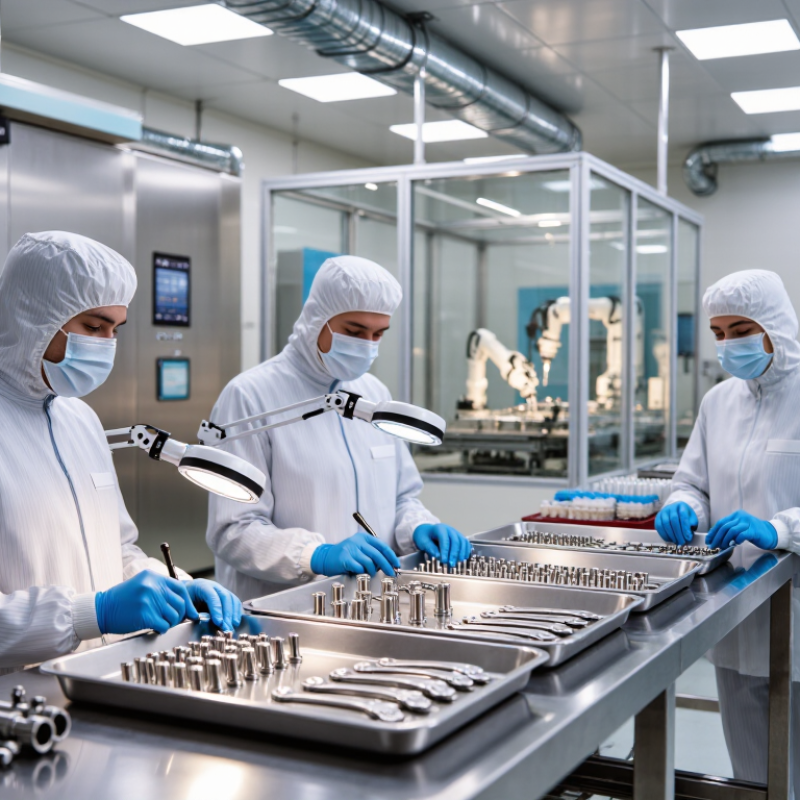
China’s orthopedic implant industry has grown from contract production into a more capable medical manufacturing sector. Leading manufacturers now develop joint replacements, spinal systems, trauma plates, and surgical instruments. Their work involves material science, precision machining, surface treatment, and strict quality controls. Titanium may look simple, but its surface finish can influence tissue response and cleaning performance. Small particles or residues can create serious clinical concerns.
Hygiene is not limited to the operating room. It begins with controlled factory zones, validated cleaning processes, sealed packaging, and clear batch traceability. Experienced manufacturers test sterility barriers and monitor production records. They also cooperate with hospitals and surgeons to improve product handling. Still, no factory should be treated as perfect. Audits can miss weak points, and a clean package does not prove every process worked properly. That uncomfortable gap deserves attention.
Tips: Check sterilization records, packaging integrity, material certificates, and recall procedures before evaluating a supplier. Ask how workers control dust, oil, and metal debris. Review independent testing when available. Site visits help, but they can show only one day. Regular evidence matters more.
China’s orthopedic implant sector covers several product categories, including hip and knee replacements, trauma plates, bone screws, spinal cages, and sports medicine anchors. Each category faces different mechanical and hygiene demands. Joint implants need smooth, wear-resistant surfaces. Trauma systems require accurate threads, stable fixation, and clean instrument contact points. Spinal devices often use titanium, cobalt-chromium, or PEEK, depending on strength and imaging needs.
Modern production combines CNC machining, laser marking, additive manufacturing, and porous surface treatments. Porous titanium coatings can support bone integration, but their complex structure also requires careful cleaning validation. A tiny residue may remain in a narrow channel. That possibility deserves attention. Manufacturers should monitor particles, bioburden, packaging integrity, and sterilization compatibility through documented procedures. Cleanrooms help, but they do not replace disciplined handling or trained inspection teams.
Tips: Check whether the supplier explains cleaning stages, material traceability, and sterile-barrier testing. Ask for relevant test reports, not only attractive product photos. Inspect implant edges, threads, and porous areas under suitable magnification. Hygiene is not a single final step. It depends on design, machining, washing, packaging, and storage. No process is flawless, so honest risk review remains essential.
Common orthopedic implant categories and the number of widely used technology families associated with each category. Hygiene controls are essential because implants are placed directly inside the body and must meet strict requirements for bioburden, particulate control, cleaning, packaging, and sterilization.
The values represent commonly encountered material and manufacturing technology families, not market share or company performance. Typical technologies include CNC machining, forging, additive manufacturing, porous coating, anodizing, polishing, ultrasonic cleaning, and validated sterilization.
China Top 10 Orthopedic Implant Makers: Why Hygiene Matters
Hygiene controls are central to preventing implant-related infections. An implant may be sterile, but the surgical environment can still introduce bacteria. Effective hospitals use validated sterilization, controlled storage, and sealed packaging inspections. Staff also follow strict hand hygiene and wear appropriate protective clothing. Small failures matter. A torn package, wet surface, or rushed glove change can affect patient safety.
In orthopedic procedures, preparation begins before the operation. Teams disinfect instruments, limit unnecessary movement, and monitor operating-room airflow. They also verify sterilization records and implant traceability. These steps support reliable infection control across China’s orthopedic manufacturing and healthcare supply chain. However, no system is perfect. Human fatigue, unclear responsibilities, or incomplete documentation may weaken an otherwise strong process. Regular audits and practical training can expose these gaps before they become clinical problems.
Tips: Keep implants in clean, dry storage. Check package integrity before use. Record sterilization and lot information carefully. Clean high-touch surfaces between procedures. Encourage staff to report near misses without fear. This feedback may reveal risks that routine inspections overlook. Consistency is difficult, but it protects trust.
China’s top orthopedic implant makers must treat hygiene as a clinical responsibility. Safe production begins with controlled environments, trained operators, and verified quality systems. ISO 13485 supports consistent medical device processes, while ISO 14971 helps teams identify and reduce production risks.
Cleanrooms require more than white coats and air filters. Operators should follow gowning procedures, hand hygiene rules, and controlled material movement. Small details matter. Hair, glove powder, and loose fibers can become contamination sources. Environmental monitoring should measure particles, microorganisms, temperature, and humidity at defined intervals. Bioburden and endotoxin testing provide additional evidence before sterilization and packaging.
Sterilization validation must reflect the actual implant materials, package design, and production load. Packaging integrity testing can reveal tiny seal failures that are invisible during routine inspection. Each component should remain traceable from raw material inspection to final release. Independent audits and complete records strengthen confidence in these controls. However, a checklist alone can create false confidence. Teams may follow procedures mechanically while missing unusual conditions, such as a damaged gown or an unexpected room pressure change. Regular training, investigation of deviations, and honest review of weak data are essential. Quality improves when workers can report problems without fear and engineers examine evidence rather than defend assumptions.
A standards-based quality benchmark for evaluating orthopedic implant production without presenting company or brand-specific data.
| No. | Quality Dimension | Why Hygiene and Safety Matter | Recognized Standard or Regulatory Reference | Objective Production and Verification Benchmark | Typical Evidence for Assessment | Reference |
|---|---|---|---|---|---|---|
| 1 | Quality Management System | A controlled quality system reduces process variation, supports traceability, and ensures that nonconforming implants are identified before release. | ISO 13485:2016; GB/T 42061-2022 | Required system approach | Controlled procedures, internal-audit records, corrective-action reports, supplier qualification, and management-review records. | ISO 13485 |
| 2 | Risk Management | Risk analysis helps identify contamination, material, packaging, sterilization, and mechanical-failure hazards throughout the implant life cycle. | ISO 14971:2019 | Documented risk-control process | Risk-management plan, hazard analysis, risk-control verification, residual-risk evaluation, and post-production monitoring. | ISO 14971 |
| 3 | Biological Evaluation | Implants remain in contact with tissue or bone; biological evaluation helps control risks from cytotoxicity, sensitization, irritation, systemic toxicity, and other biological effects. | ISO 10993-1:2018 | Biological safety justified by risk | Biological-evaluation plan, material characterization, toxicological assessment, test reports, and documented rationale for any omitted tests. | ISO 10993-1 |
| 4 | Implant Design and General Safety | Cleanable, compatible, and functionally safe implant designs reduce the likelihood that residues, particles, or design defects compromise clinical use. | ISO 14630:2012 | Design requirements verified | Design inputs and outputs, verification and validation reports, dimensional drawings, usability considerations, and design-change records. | ISO 14630 |
| 5 | Material Traceability and Compatibility | Correct material identity and traceability help prevent unintended reactions, mechanical incompatibility, and use of unapproved raw materials. | ISO 5832 series; ASTM F67; ASTM F75; ASTM F138, where applicable | Material identity and batch history maintained | Material certificates, incoming inspection, heat or lot numbers, chemical-composition records, supplier certificates, and full batch genealogy. | ISO 5832 catalogue |
| 6 | Manufacturing Cleanliness | Effective cleaning removes oils, machining debris, residues, and particles that may interfere with sterilization or cause adverse tissue responses. | ISO 14644-1; ASTM F86 | Validated cleaning and controlled environment | Cleaning-validation protocol, residue limits, particulate monitoring, equipment-cleaning records, environmental monitoring, and operator-gowning procedures. | ISO 14644-1 |
| 7 | Bioburden Control | Bioburden measurement provides information about the microbial load before sterilization and supports sterilization-process control. | ISO 11737-1:2018 | Routine monitoring and trend evaluation | Sampling plan, recovery-method validation, microbial enumeration results, alert or action limits, trend charts, and investigation records. | ISO 11737-1 |
| 8 | Sterilization Process Validation | Validated sterilization is essential for reducing viable microorganisms on implants supplied as sterile. | ISO 11135:2014 for ethylene oxide; ISO 11137-1:2015 for radiation; ISO 17665:2024 for moist heat, as applicable | Validated cycle, controlled routine release | Installation, operational, and performance qualification; cycle records; dosimetry or biological-indicator records where applicable; and requalification documentation. | ISO 11135 |
| 9 | Sterility Testing and Packaging Integrity | Packaging must maintain sterility until the stated expiry date and protect the implant from contamination during transport and storage. | ISO 11737-2:2019; ISO 11607-1:2019; ISO 11607-2:2019 | Sterile-barrier integrity demonstrated | Sterility-test records, seal-strength testing, package-integrity testing, aging studies, transport simulation, and distribution-condition controls. | ISO 11607 |
| 10 | Labeling, Packaging, and Traceability | Accurate labeling helps clinical users identify the implant, sterilization status, expiry information, storage conditions, and applicable warnings. | ISO 15223-1:2021; applicable Chinese medical-device regulatory requirements | Labeling and records support product traceability | Label approval records, unique device or batch identifiers, sterilization status, expiry-date controls, complaint files, and recall procedures. | ISO 15223-1 |
When comparing China’s top orthopedic implant makers, hygiene should mean controlled evidence, not a spotless factory tour. The WHO Global Guidelines for Surgical Site Infection Prevention report that surgical site infections affect about 11% of patients in low- and middle-income countries. For implant surgery, even a small contamination risk can create severe clinical and financial consequences.
Look for documented cleanroom controls under ISO 14644, validated sterilization under ISO 11135 or ISO 11137, and bioburden testing based on ISO 11737. Ask manufacturers to show recent environmental monitoring trends, not isolated “pass” results. Packaging integrity testing also matters because a sterile implant can become unsafe after transport damage. I would compare lot traceability, supplier audits, nonconformance handling, and complaint-response times. These details reveal operational maturity.
Certificates help, but they are not enough. ISO 13485 certification confirms a quality-management framework, not perfect daily execution. A 2023 industry review in The Journal of Arthroplasty noted that infection rates after primary joint replacement are commonly around 1% to 2%, although results vary by procedure and patient risk. That range deserves caution. Factory claims may look precise, while real-world data remains incomplete. Buyers should request sterilization records, recall history, and independent audit findings. One overlooked question is simple: how quickly can the maker identify every affected lot?
Common categories include hip and knee replacements, trauma plates, bone screws, spinal cages, and sports medicine anchors.
Spinal devices may use titanium, cobalt-chromium, or PEEK. Material choice depends on strength and imaging requirements.
Production may combine CNC machining, laser marking, additive manufacturing, and porous surface treatments.
Narrow pores can trap tiny residues. Careful cleaning validation is necessary before packaging and sterilization.
Controlled rooms, trained operators, gowning rules, environmental monitoring, and documented cleaning procedures are important.Small details matter.
Review traceability, cleaning records, sterilization validation, packaging tests, supplier audits, and complaint-response times.
No. Certificates show a quality framework, but they cannot guarantee perfect daily execution.
Examine edges, threads, contact points, and porous areas under suitable magnification. Look for particles, damage, or unfinished surfaces.
A sterile implant may become unsafe after transport damage. Tiny seal failures can be difficult to see without testing.
Teams should investigate deviations, review weak data, and identify every affected lot quickly. No process is flawless.
China’s orthopedic implant industry is developing through advances in materials, precision manufacturing, and clinical technology. Leading manufacturers commonly produce joint replacement systems, trauma fixation devices, spinal implants, and related surgical instruments. Their technologies may include biocompatible metals, advanced polymers, surface treatments, computer-assisted design, and precision machining. When comparing manufacturers, buyers should consider product reliability, research capabilities, manufacturing consistency, traceability, testing procedures, technical support, and compliance with recognized quality requirements.
Why is hygiene control important in orthopedic implants production? Strict hygiene control helps prevent microorganisms, particles, and other contaminants from entering implants or their packaging during manufacturing, assembly, sterilization, and storage. Effective cleanroom management, validated sterilization processes, trained personnel, environmental monitoring, and sealed packaging are essential for reducing implant-related infection risks. Strong hygiene practices also support stable product quality, patient safety, regulatory compliance, and long-term confidence in orthopedic implant performance.

KaiSo Medical