China Top 10 Orthopedic Implants Why Is Innovation Important?

Time:2026-11-13 Author:Mason
0%

China’s orthopedic implant sector is shaped by an ageing population, rising expectations for mobility, and changing surgical practice. The National Bureau of Statistics of China reported that people aged 60 and older reached 296.97 million in 2023, or 21.1% of the population. This demographic shift adds pressure to provide durable, well-supported options for joint and fracture care. It does not, by itself, prove that any particular implant is better.

Industry forecasts also point to a growing field. Fortune Business Insights estimated the global orthopedic implants market at USD 51.67 billion in 2023 and projected USD 87.58 billion by 2032. Such estimates describe market value, not clinical performance. That distinction matters. In this guide to China’s top 10 orthopedic implants, products should be assessed through their intended use, material, design, clinical evidence, and manufacturer support—not marketing claims alone.

Why is product innovation important for orthopedic implants? Thoughtful advances can address practical needs, such as porous titanium surfaces that support bone integration, wear-resistant bearing materials, or planning tools that help surgeons assess implant fit. Yet innovation is not automatically progress. A new design still needs reliable testing, appropriate patient selection, and long-term follow-up; evidence can be uneven, and real-world outcomes may differ. That is worth keeping in mind. A useful comparison should therefore consider both technical features and the quality of evidence behind them, while recognizing that the right implant depends on the patient and procedure.
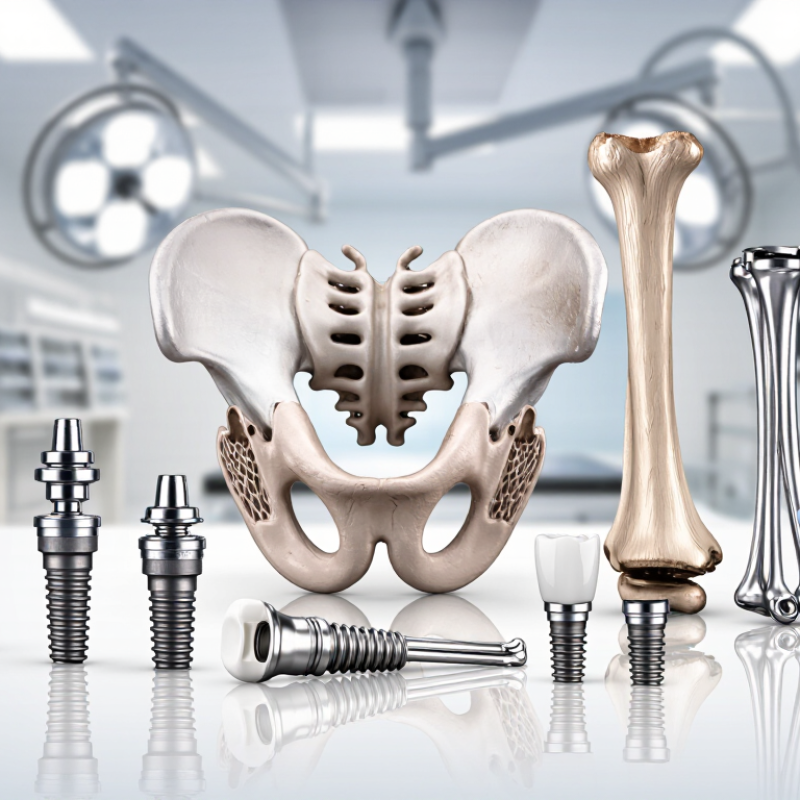
China Top 10 Orthopedic Implants Why Is Innovation Important?

Orthopedic Implants in China: Scope and Major Device Classes

Orthopedic implants in China serve a wide range of clinical needs, from stabilizing fractures to replacing damaged joints. The main device classes include trauma fixation systems, spinal implants, joint replacements, and sports medicine devices. Each addresses different anatomy, movement, and healing demands.

Trauma devices include plates, screws, and intramedullary nails. A tibial fracture may need a nail inside the bone, while a wrist fracture may call for a small plate and carefully placed screws. Spinal systems use rods, screws, and interbody cages to support selected segments. Hip and knee implants replace worn joint surfaces, while anchors and other devices can help repair injured soft tissues. These categories overlap more than a tidy chart suggests.

Innovation matters when it improves fit, stability, surgical handling, or follow-up care. But a newer design is not automatically better. Surgeons consider imaging, bone quality, age, activity, and the patient’s overall health before choosing an implant. Hospitals also need reliable supply, clear technical information, and staff training. China’s large and varied patient population makes those practical details important. A device that works well in one setting may need further evaluation elsewhere. That gap deserves attention.

China’s Top 10 Implant Types: Hip, Knee, Spine, Trauma, and More

China’s orthopedic implant field covers more than hip and knee replacements. A practical map of ten implant types includes hip prostheses, knee prostheses, spinal cages and rods, trauma plates, bone screws, intramedullary nails, external fixators, shoulder implants, elbow implants, and ankle implants. This is a clinical grouping, not a sales ranking; reported procedure volumes depend on registry coverage and reporting year.

Demand is shaped partly by an aging population. China’s National Health Commission reported 296.97 million people aged 60 or older in 2023, equal to 21.1% of the population. The World Health Organization’s musculoskeletal health fact sheet estimates that about 1.71 billion people worldwide live with musculoskeletal conditions. These figures provide context, not a direct forecast of implant purchases. Important distinction.

Innovation matters in practical ways. Porous surfaces can support bone attachment, while improved implant geometry may help surgeons fit devices to varied anatomy. For a spinal cage, millimeters can affect placement; for a trauma plate, screw direction can influence stability. Better imaging and surgical planning also help teams choose suitable sizes. Yet a new design does not guarantee better outcomes. Long-term follow-up, complication reporting, and clear evidence remain essential—and are not always equally complete across datasets.

WHO: Musculoskeletal Conditions Affect 1.71 Billion People Worldwide

China Top 10 Orthopedic Implants: Why Is Innovation Important?

WHO estimates that musculoskeletal conditions affect 1.71 billion people worldwide. These conditions can cause pain, limit movement, and make everyday tasks difficult. The scale is striking. Yet this figure does not mean every affected person needs surgery or an implant. Care depends on the condition, a person’s health, and professional assessment.

For people who do need joint or bone reconstruction, implant design can influence stability, fit, and recovery planning. Innovation may improve imaging, surgical instruments, materials, or implant shapes that better match individual anatomy. Small details matter, such as how a knee implant moves when someone climbs stairs. But newer is not automatically better. Evidence, durability, patient needs, and careful follow-up matter more than novelty alone. I may be emphasizing technology too much; access to rehabilitation and skilled care matters just as much.

Tips: Ask how an implant option fits your diagnosis and daily needs. Discuss expected benefits, possible complications, and recovery time with a qualified clinician. Check whether outcomes and long-term performance are supported by reliable evidence. A second opinion can help when choices feel unclear.

China Top 10 Orthopedic Implants: Why Is Innovation Important? — WHO: Musculoskeletal Conditions Affect 1.71 Billion People Worldwide

The table summarizes ten widely used orthopedic implant categories and relevant innovation priorities. It is not a ranking of manufacturers, sales, or market share.

Implant category Common clinical use Materials and design features Why innovation matters
Total hip replacement components Replace a damaged hip joint, commonly in people with advanced osteoarthritis or certain hip fractures. Typically include a femoral stem, head, and acetabular component; materials may include titanium alloys, cobalt-chromium alloys, ceramics, and highly cross-linked polyethylene. Improved bearing surfaces, fixation, and component design may help address wear, loosening, stability, and the needs of different patients.
Total knee replacement components Replace damaged surfaces of the knee joint, most often for severe osteoarthritis. Common designs use metal femoral and tibial components with a polyethylene bearing; some systems include a patellar component. Design refinements can support appropriate alignment, stability, range of motion, and fit while helping clinicians accommodate differences in anatomy.
Spinal pedicle screw-and-rod systems Stabilize selected spinal segments in procedures for conditions such as deformity, instability, or fractures. Usually made from titanium alloy or stainless steel; screws connect to rods to provide internal fixation. Accurate placement, secure fixation, and imaging-compatible planning are important for procedural safety and construct performance.
Interbody fusion cages Support the space between vertebrae during spinal fusion procedures. May be made from titanium, porous titanium, or radiolucent polymers such as PEEK; designs can include openings for bone graft material. Porosity, surface structure, and imaging visibility are design considerations that may support bone integration and postoperative assessment.
Trauma plates and screws Hold fractured bones in alignment while they heal, including fractures of the long bones and around joints. Commonly made from titanium alloys or stainless steel; plate and screw designs vary by bone and fracture pattern. More adaptable fixation options can help surgeons address varied fracture patterns and balance stability with the needs of healing bone.
Intramedullary nails Stabilize fractures of long bones, such as the femur or tibia, by placing a nail within the bone canal. Metal nails are commonly secured with locking screws; design and dimensions depend on the bone and fracture. Refined targeting and locking features can support accurate fixation and may reduce the difficulty of placing screws during surgery.
Shoulder joint replacement components Replace or reconstruct parts of the shoulder joint for conditions including severe arthritis and complex fractures. Components may include a humeral stem or head and a glenoid component; anatomical and reverse designs serve different clinical situations. Patient-specific planning and suitable implant geometry matter because shoulder function depends on joint mechanics and the condition of surrounding tissues.
Ankle replacement components Replace the ankle joint in selected patients with end-stage ankle arthritis. Typically use metal components with a polymer bearing; implant geometry is designed to preserve joint movement. Improvements in alignment, fixation, and component fit are important for this complex, load-bearing joint.
External fixation systems Stabilize fractures or limb segments using pins or wires connected to an external frame. Frames may be modular or circular, allowing adjustment of fixation around the injured limb. Modularity and adjustability can help clinicians manage complex injuries, soft-tissue concerns, and staged treatment.
Patient-specific orthopedic implants Used in selected complex reconstructions, including cases with substantial bone loss or unusual anatomy. May be designed from medical imaging and manufactured using methods such as additive manufacturing; material selection depends on the indication and device. Individualized geometry can help address anatomical complexity, although clinical suitability, manufacturing quality, and regulatory requirements remain essential.

Context: The World Health Organization estimates that musculoskeletal conditions affect approximately 1.71 billion people worldwide. Implant selection and outcomes depend on the diagnosis, patient factors, surgical technique, and follow-up care.

Innovation in Materials and Design: Improving Implant Fit and Durability

An orthopedic implant must match more than a scan. It must sit securely, move naturally, and tolerate years of repeated loading. Small design choices matter: a femoral stem’s taper can affect initial stability, while a porous surface may support bone ingrowth. Materials matter too. Ceramic and highly cross-linked polyethylene can reduce wear in some joint replacements, but no material removes every risk. Fit is personal.

The UK National Joint Registry’s 2024 Annual Report documents more than four million recorded joint-replacement procedures. That scale makes long-term monitoring valuable: registry data can reveal revision patterns that short clinical studies may miss. Australia’s 2024 joint-replacement registry report also compares outcomes across implant types and combinations. These reports reinforce a practical point: innovation should be judged by patient outcomes, not novelty alone. A closer anatomical fit may improve comfort, yet complex geometry can make placement less forgiving. Better design is not automatically better care. Surgeons still need clear evidence on wear, fixation, and revision rates, and those answers take time.

China’s 2021 Joint Procurement Cut Average Prices by About 82%—Why Innovation Matters

China’s 2021 joint procurement cut average prices by about 82%, putting affordability at the center of orthopedic implant purchasing. That is a striking shift. Lower prices can widen access, but they make innovation more important, not less. Hospitals still need implants that fit varied anatomy, withstand repeated loading, and remain dependable through years of use. A lower purchase price does not automatically mean a lower lifetime cost.

Innovation should be judged by evidence, not slogans. Look for clear data on material performance, wear, complication rates, and outcomes across patient groups. Better sizing options or more consistent manufacturing can matter in the operating room. So can practical tools that help surgeons plan placement. Yet no design removes every risk. That deserves honest discussion.

Tips: Compare total cost, not unit price alone. Ask how performance was tested, whether follow-up data are available, and how an implant suits local clinical needs. Check training and supply continuity, too. Small details matter.

A procurement system focused heavily on price may encourage efficiency, but it can also leave less room for research and quality improvements. The balance is difficult. I would avoid treating an 82% reduction as proof of either success or harm. Buyers should track outcomes after purchase, including revision rates and patient function. Innovation is valuable when it improves care measurably while keeping products accessible and reliable.

FAQS

How many people worldwide are affected by musculoskeletal conditions?

The World Health Organization estimates 1.71 billion people are affected. This figure is large, but it does not mean everyone needs surgery.

Do musculoskeletal conditions always require an implant?

No. Treatment depends on the diagnosis, overall health, and professional assessment. Some people may never need an operation.

Why can implant innovation matter?

Improved sizing, materials, imaging, or surgical tools may support fit and placement. Small details can affect movement, such as climbing stairs.

Does a lower purchase price mean a lower lifetime cost?

Not necessarily. An implant must remain dependable through years of repeated use. Follow-up care and possible revisions also affect total costs.

What does the reported 82% price reduction mean?

China’s 2021 joint procurement reduced average prices by about 82%. That can improve affordability, but price alone does not show product quality.

What evidence should buyers examine?

Review data on material performance, wear, complications, and patient outcomes. Long-term follow-up matters. Slogans are not evidence.

What should patients ask before choosing an implant?

Ask how the option suits your diagnosis and daily activities. Discuss expected benefits, possible complications, and recovery time with a qualified clinician.

Why should hospitals track outcomes after purchasing implants?

Tracking revision rates and patient function can show whether products perform well in practice. I may overemphasize technology; skilled care and rehabilitation matter too.

Conclusion

China’s orthopedic implant market covers a broad range of devices used to restore movement, stabilize bones, and support recovery. Its major implant types include hip and knee replacements, spinal devices, trauma fixation plates and screws, intramedullary nails, shoulder implants, and other devices for joints and bone repair. The need for these treatments is substantial: the World Health Organization estimates that musculoskeletal conditions affect 1.71 billion people worldwide, creating demand for implants that can meet varied clinical needs.

Why is product innovation important for orthopedic implants? Advances in materials, implant geometry, and design can help improve fit, durability, and function while supporting more personalized treatment. Innovation also matters in a changing market. China’s 2021 joint procurement reduced average prices by about 82%, increasing pressure to deliver dependable performance and value. Continued improvement in implant design and manufacturing can help address these challenges and better serve patients and healthcare providers.

Mason

Mason

Mason is a seasoned marketing professional with a deep expertise in the company's offerings and a passion for driving brand awareness. With a strong background in digital marketing strategies, he has an innate ability to connect with diverse audiences and effectively communicate product benefits.......